Therapeutic Directions


The biological complexity of spinal cord injury (SCI) makes it unlikely that a single intervention can produce meaningful recovery. Effective therapeutic strategies must address multiple mechanisms simultaneously, including neuroprotection, modulation of the inhibitory environment, promotion of axonal growth, restoration of conduction, and enhancement of neural plasticity [1,2].
Our research focus follows a mechanism-based approach, examining therapeutic directions that target key barriers to repair across different phases of injury.
- Modulating the Inhibitory Environment
One of the principal barriers to regeneration after SCI is the formation of a non-permissive extracellular environment dominated by inhibitory molecules.
Therapeutic strategies aim to reduce or bypass this inhibition by targeting components such as chondroitin sulfate proteoglycans (CSPGs) and their associated receptors, thereby enabling axonal extension and synaptic remodeling [3,4].
(Linked research areas: Chondroitinase ABC, NVG-291)
- Reactivating Axonal Growth and Neural Plasticity
Adult central nervous system neurons retain a latent capacity for growth that is actively suppressed after injury.
Current therapeutic directions explore molecular and peptide-based approaches to reactivate intrinsic growth programs, enhance synaptic plasticity, and promote adaptive circuit reorganization rather than relying solely on long-distance axonal regeneration [5,6].
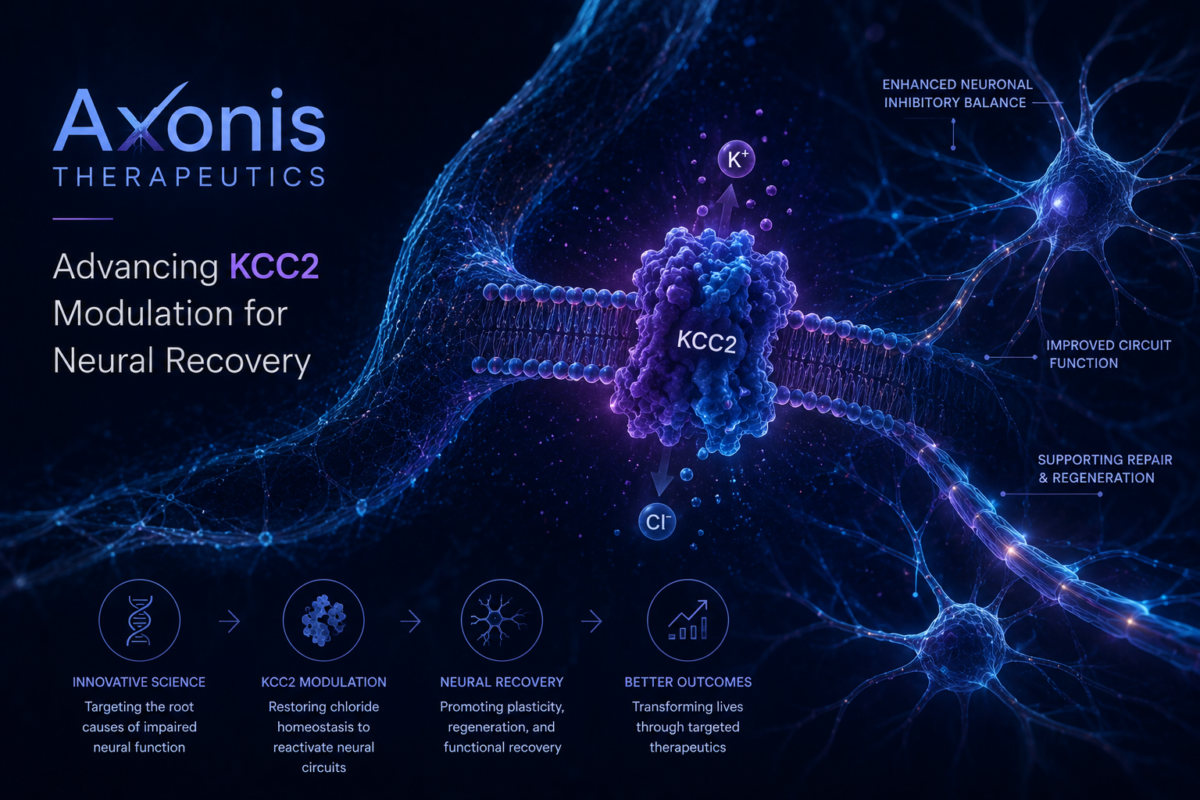
(Linked research areas: NVG-291, GHK-Cu, AXONIS)
- Neuroprotection and Secondary Injury Mitigation
Secondary injury processes significantly expand tissue damage following the initial trauma.
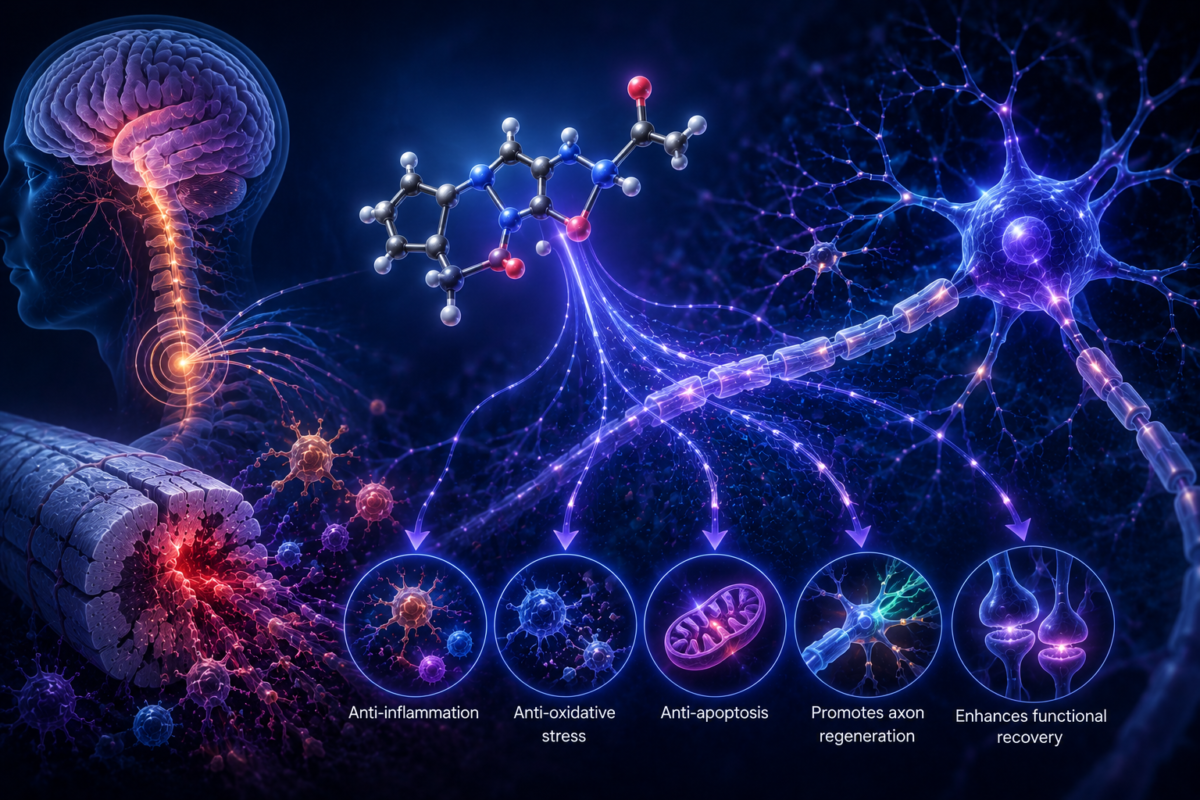
Therapeutic approaches in this area focus on limiting inflammation, oxidative stress, vascular dysfunction, and programmed cell death in order to preserve neurons and oligodendrocytes that are essential for later recovery [7,8].
(Linked research areas: BPC-157, TB-500)
- Promoting Remyelination and Functional Conduction
Demyelination of spared axons is a major contributor to functional impairment after SCI.
Strategies that support oligodendrocyte survival and promote remyelination aim to restore effective signal conduction and improve the functional output of preserved neural pathways [9].
- Neuromodulation and Network Re-engagement
Functional recovery does not depend solely on structural repair.
Neuromodulatory approaches, including spinal and epidural stimulation, seek to re-engage existing neural circuits, enhance activity-dependent plasticity, and improve motor output even in the absence of complete anatomical regeneration [10,11].
(Linked research areas: Epidural Stimulation)
- Emerging and Exploratory Directions
In addition to direct regenerative strategies, exploratory approaches investigate systemic and neurochemical factors that may influence plasticity, inflammation, and adaptation after injury.
These directions are approached cautiously and evaluated within a structured scientific framework [12,13].
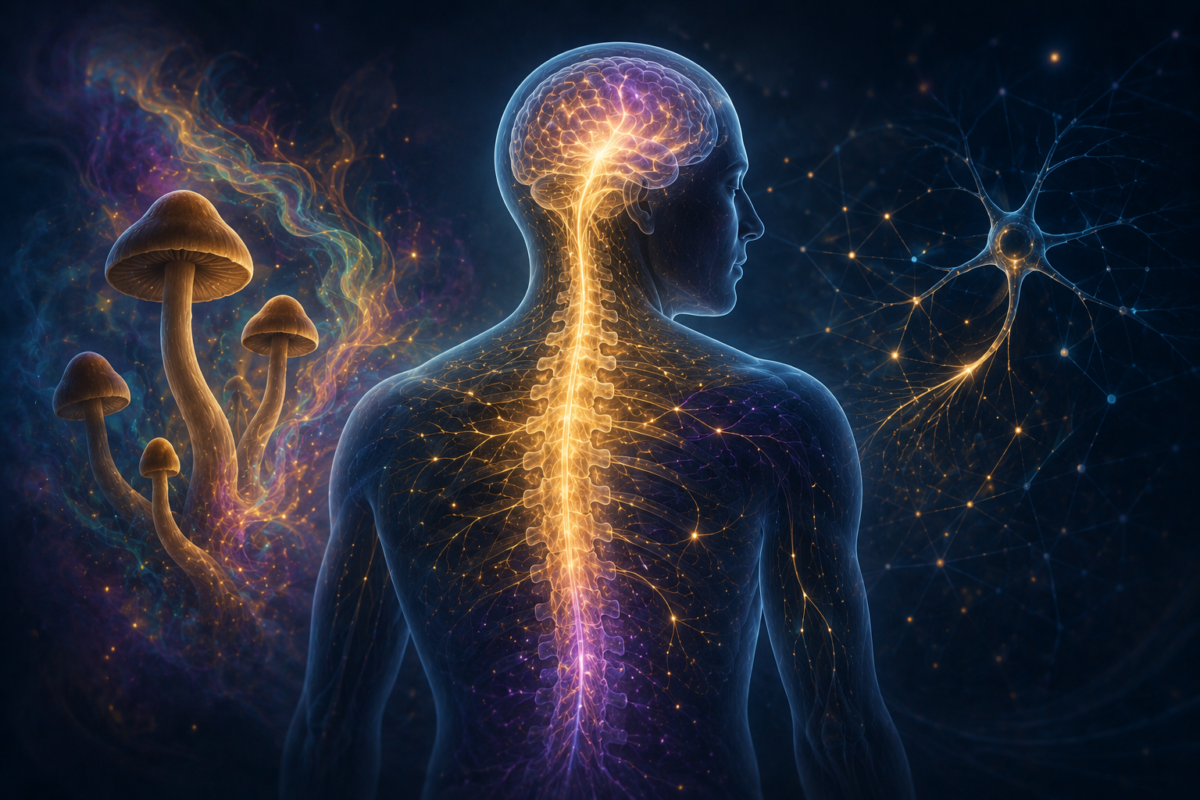
(Linked research areas: Psilocybin, Hypnosis, Smoking & Nicotine)
- Combination and Sequential Therapeutic Strategies
Growing evidence suggests that combining therapies that target different biological mechanisms may offer greater benefit than single-target interventions.
Key research challenges include determining optimal timing, dosing, and sequencing, as well as understanding potential synergistic or antagonistic interactions between therapies [1,14].
Scientific Direction
Rather than focusing on a single therapeutic modality, our work emphasizes structured evaluation of multiple intervention strategies within the biological context of spinal cord injury. This approach supports informed decision-making regarding translational potential and the design of future therapeutic pathways.
References
- Silver J, Schwab ME. Regeneration and the glial scar in spinal cord injury. Nat Rev Neurosci. 2015.
- Ahuja CS, et al. Traumatic spinal cord injury—repair and regeneration. Nat Rev Neurol. 2017.
- Bradbury EJ, McMahon SB. Spinal cord repair strategies: why do they work? Nat Rev Neurosci. 2006.
- Sharma K, et al. Receptor-mediated inhibition of axon regeneration. Trends Neurosci. 2012.
- Liu K, et al. Intrinsic mechanisms of axon regeneration. Annu Rev Neurosci. 2011.
- Rosenzweig ES, et al. Harnessing neural plasticity after spinal cord injury. Nat Rev Neurosci. 2018.
- Anjum A, et al. Spinal cord injury: pathophysiology and emerging therapies. Mol Neurobiol. 2020.
- Hellenbrand DJ, et al. Inflammation after spinal cord injury. Neural Regen Res. 2021.
- Duncan ID, Radcliff AB. Remyelination in the CNS. Nat Rev Neurosci. 2016.
- Angeli CA, et al. Epidural stimulation restores voluntary movement after SCI. N Engl J Med. 2018.
- Wagner FB, et al. Targeted neurotechnology restores walking in humans with SCI. Nature. 2018.
- Nichols DE, Johnson MW, Nichols CD. Psychedelics as therapeutics. Pharmacol Rev. 2017.
- Dietz V, Fouad K. Restoration of sensorimotor functions after SCI. Brain. 2014.
- Courtine G, Sofroniew MV. Spinal cord repair: advances in biology and technology. Nat Med. 2019.