Axonis Therapeutics: Advancing KCC2 Modulation for Neural Recovery

Introduction
Axonis Therapeutics is a biotechnology company developing first-in-class oral small-molecule drugs that target KCC2, a potassium-chloride cotransporter essential for maintaining inhibitory neurotransmission in the central nervous system (CNS).
Axonis focuses on conditions in which impaired inhibitory signaling contributes to dysfunction, which includes spinal cord injury (SCI), refractory epilepsy, chronic neuropathic pain, and neonatal seizures.
KCC2: A Central Regulator of Neuronal Excitability
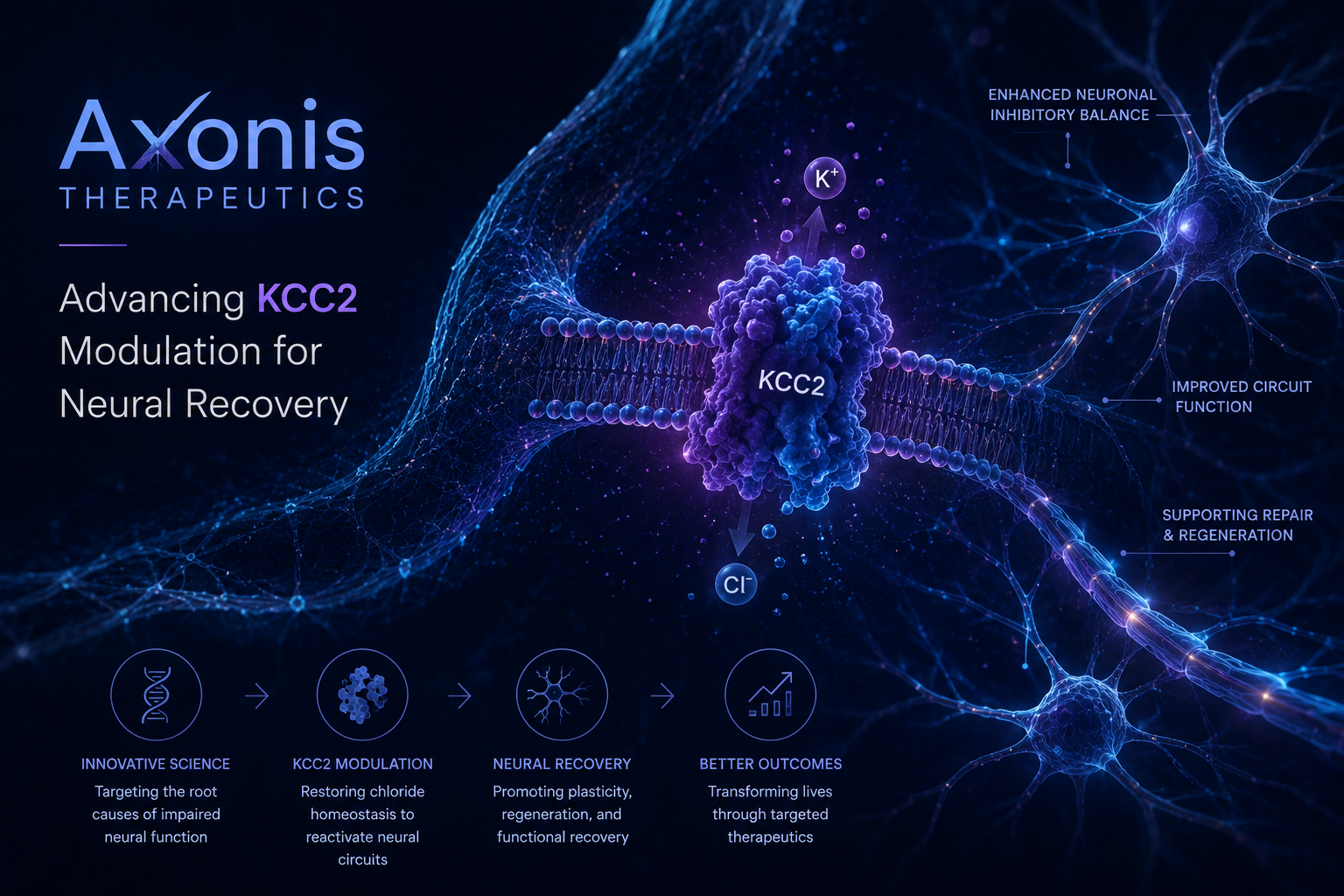
KCC2 (SLC12A5) is a neuron-specific transporter responsible for exporting chloride ions from neurons. This process is essential for enabling GABAergic inhibition, the primary form of inhibitory signaling in the CNS. When KCC2 function is reduced—after spinal cord injury, seizures, or chronic pain—neurons accumulate chloride, making inhibitory signals less effective. This leads to:
- hyperexcitability
- impaired signal processing
- altered plasticity
- vulnerability to further damage
Restoring KCC2 activity is therefore a promising strategy for re-establishing neuronal balance and supporting recovery.
Axonis Drug Candidates
Axonis is developing two proprietary oral small molecules, AXN-006 and AXN-027, designed to potentiate KCC2 function. Although the detailed molecular structures are not publicly disclosed, both candidates belong to a class of compounds capable of enhancing chloride extrusion through KCC2.
AXN-006
Overview
AXN-006 is a preclinical candidate targeting KCC2 to restore inhibitory neurotransmission in CNS disorders.
Mechanism of Action
- Potentiates KCC2 activity, supporting chloride extrusion
- Helps normalize GABAergic signaling
- May reduce hyperexcitability in pathological conditions
Research Findings
In rodent studies, AXN-006 has:
- rescued phenobarbital-resistant neonatal seizures
- reduced seizure-like activity in neuronal co-cultures
- shown KCC2-dependent mechanisms in vitro
These findings suggest potential utility for conditions where current treatments have limited efficacy.
Development Status
- Preclinical
- Supported by a $2.2M NIH SBIR Phase II grant
- No registered human trials to date
AXN-027
Overview
AXN-027 is Axonis’s lead clinical candidate and the first oral KCC2 potentiator to enter human testing.
Mechanism of Action
Like AXN-006, AXN-027:
- enhances KCC2 function
- aims to restore inhibitory tone
- may reduce hyperexcitability after neurological injury
Potential Indications
- spinal cord injury
- refractory epilepsy
- chronic neuropathic pain
Clinical Development
Axonis has initiated a Phase 1 clinical trial to evaluate:
- safety in healthy adults
- pharmacokinetics
- food effects
- capsule vs. tablet formulations
Results from this early study will inform dosing and design for future clinical trials in neurological injury and disease.
Why KCC2 Modulation Matters for Spinal Cord Injury
After SCI, KCC2 expression is rapidly downregulated, leading to:
- disturbed inhibitory signaling
- heightened neuronal excitability
- impaired motor coordination
- altered sensory processing
Restoring KCC2 function may help:
- stabilize neuronal activity
- improve spinal circuit function
- support sensorimotor recovery
- reduce neuropathic pain associated with SCI
This makes KCC2 a compelling target for conditions beyond epilepsy and seizures.
Scientific Background: KCC2 Potentiators
Although AXN-006 and AXN-027 are proprietary, academic research has identified several small-molecule KCC2 modulators (e.g., VU0469 and related compounds) that enhance KCC2-dependent chloride extrusion and reduce neuronal excitability in vitro.
These studies support the broader strategy behind Axonis’s drug discovery efforts, even though proprietary molecules have not been structurally disclosed.
Conclusion
Axonis Therapeutics is pioneering a new therapeutic direction by targeting KCC2, a critical regulator of neuronal inhibition. With one clinical candidate already in Phase 1 testing and strong preclinical support for KCC2 potentiation, Axonis is helping expand the landscape of treatments for spinal cord injury, epilepsy, chronic pain, and related neurological disorders.
Further clinical research will determine how these mechanisms translate into functional improvements in human populations.