KCL-286: A Selective RARβ Agonist for Neural Repair

Introduction
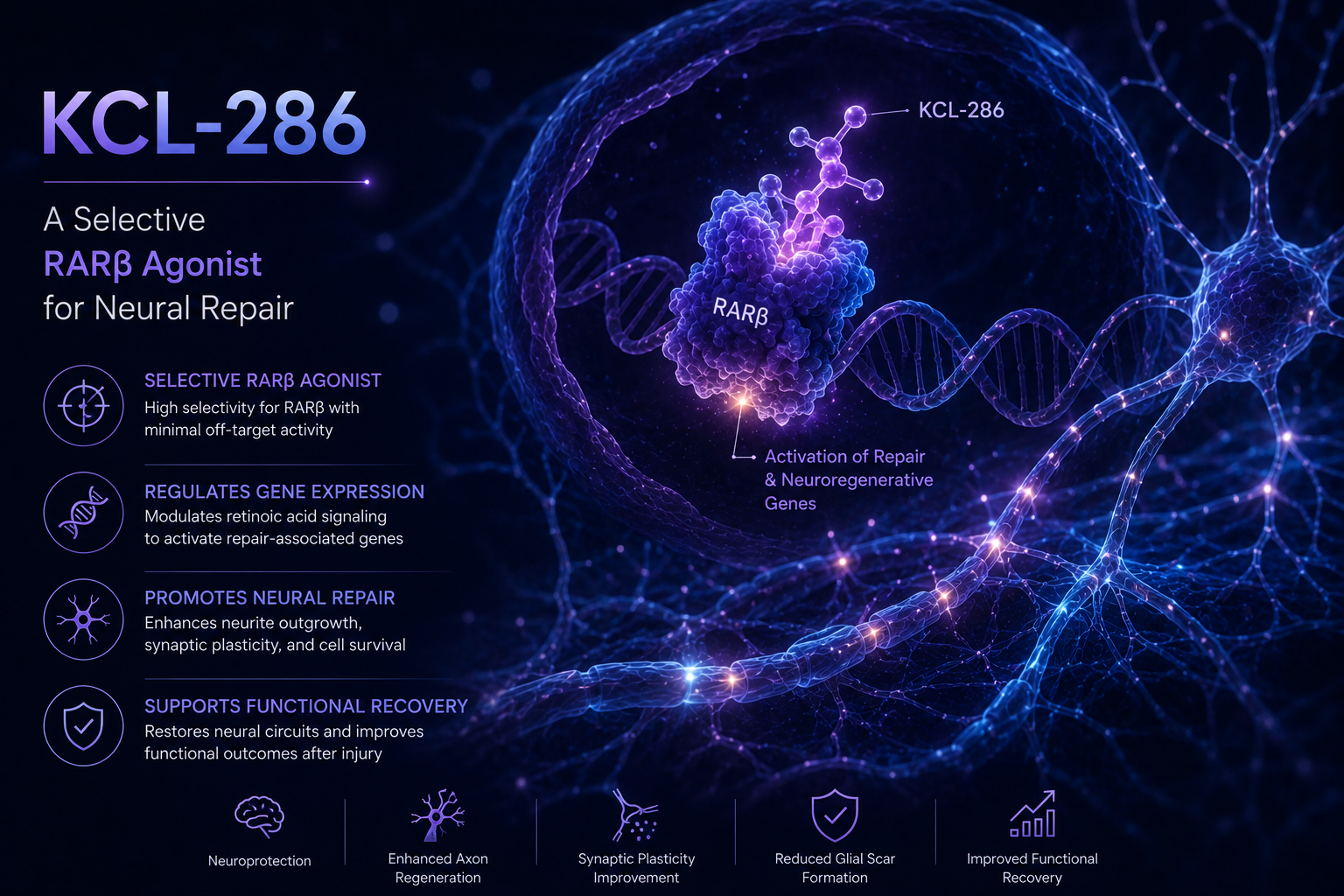
KCL-286 is an orally administered small-molecule drug being developed to support repair after spinal cord injury (SCI). It works by activating a receptor called RARβ (retinoic acid receptor-beta), which plays an important role in how neurons grow, communicate, and respond to injury.
Research over the past decade has shown that stimulating RARβ can help neurons overcome some of the barriers that normally prevent regeneration in the adult central nervous system.
What is KCL-286?
KCL-286 is a synthetic small molecule, not a peptide or a biologic.
Small molecules have several features that make them useful for clinical development:
- they can be taken orally
- they are chemically stable
- they can reach the bloodstream and tissues efficiently
- they are suitable for long-term use
This makes KCL-286 different from many peptide-based experimental treatments, which often require injections or specialized delivery methods.
Why RARβ Matters
RARβ is a protein inside neurons that helps regulate:
- axon growth
- cell survival
- interactions with glial cells
- remyelination
- the organization of the extracellular matrix (ECM)
When activated, RARβ can encourage neurons to grow their axons even in environments that are normally inhibitory after injury.
How KCL-286 Works
Studies on RARβ agonists—including KCL-286 and its closely related earlier versions—have shown several consistent effects:
- Supporting Axonal Regeneration
RARβ activation turns on genetic programs that help axons grow. In multiple laboratory models, this has enabled sensory and motor axons to regenerate across injury sites that would normally block growth.
- Influencing the Extracellular Matrix
RARβ activation can reduce the presence of molecules such as CSPGs that inhibit axonal growth after SCI.
This creates a more supportive environment for regeneration.
- Promoting Remyelination
RARβ can help oligodendrocyte precursor cells mature and form new myelin, which is essential for restoring nerve conduction after injury.
- Modulating Glial Responses
RARβ signaling has been associated with reduced glial scarring and healthier communication between neurons and glial cells.
These effects combine to make the injured spinal cord more receptive to repair.
What Preclinical Research Shows
In several rodent models of spinal cord injury, RARβ agonists related to KCL-286 have demonstrated:
- better axonal regrowth
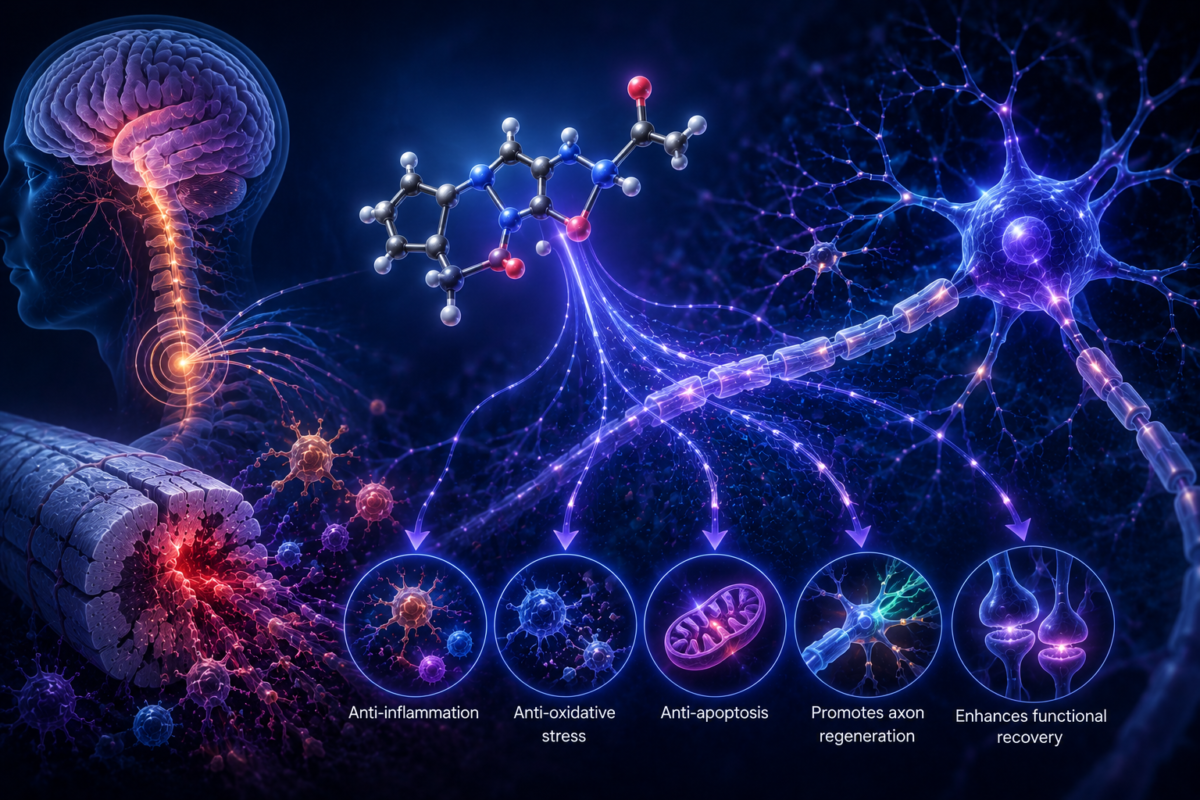
- reduced inflammation
- smaller scar tissue formation
- improved preservation of tissue
- measurable improvements in movement and sensory function
These findings form the scientific foundation for advancing KCL-286 into human studies.
Human Studies: Phase 1 Trial Results
KCL-286 has completed a Phase 1 clinical trial in 109 healthy volunteers.
Safety
The drug was well tolerated across a range of doses. Reported side effects were mild and reversible:
- dry skin
- mild rash
- temporary increases in liver enzymes
No serious adverse events were reported.
Drug Behavior in the Body
KCL-286 showed:
- predictable, dose-dependent absorption
- a half-life of around 4–7 hours
- slower absorption with food
Target Engagement
Importantly, KCL-286 activated its intended receptor pathway in humans, shown by increases in RARβ2 mRNA in blood cells.
This confirms that the drug successfully engages its target at clinically relevant doses.
Conclusion
KCL-286 is a promising oral small-molecule treatment aimed at activating RARβ pathways that support neural repair. Research so far—both in the laboratory and in early human trials—suggests that this mechanism may help address several key obstacles to spinal cord recovery, including inhibitory ECM molecules, reduced axon growth, and limited remyelination.
Further clinical trials will determine whether these biological effects can translate into meaningful improvements for individuals living with spinal cord injury.