GHK-Cu: Exploring a Naturally Occurring Peptide in Tissue Repair and Wound Biology

Introduction
GHK-Cu is a naturally occurring peptide–copper complex found in human plasma, saliva, and other tissues. Over the past several decades, it has been studied for its roles in tissue repair, cellular signaling, and responses to injury. Because individuals with spinal cord injury frequently experience chronic wounds such as pressure ulcers, there is growing interest in understanding biological factors that influence wound healing—GHK-Cu being one of them.
GHK-Cu is not a standalone therapy; rather, it is a biological molecule with mechanisms that may contribute to the wound-healing process under experimental conditions. Research continues to explore how these mechanisms might eventually support improved strategies for chronic wound care.
What Is GHK-Cu?
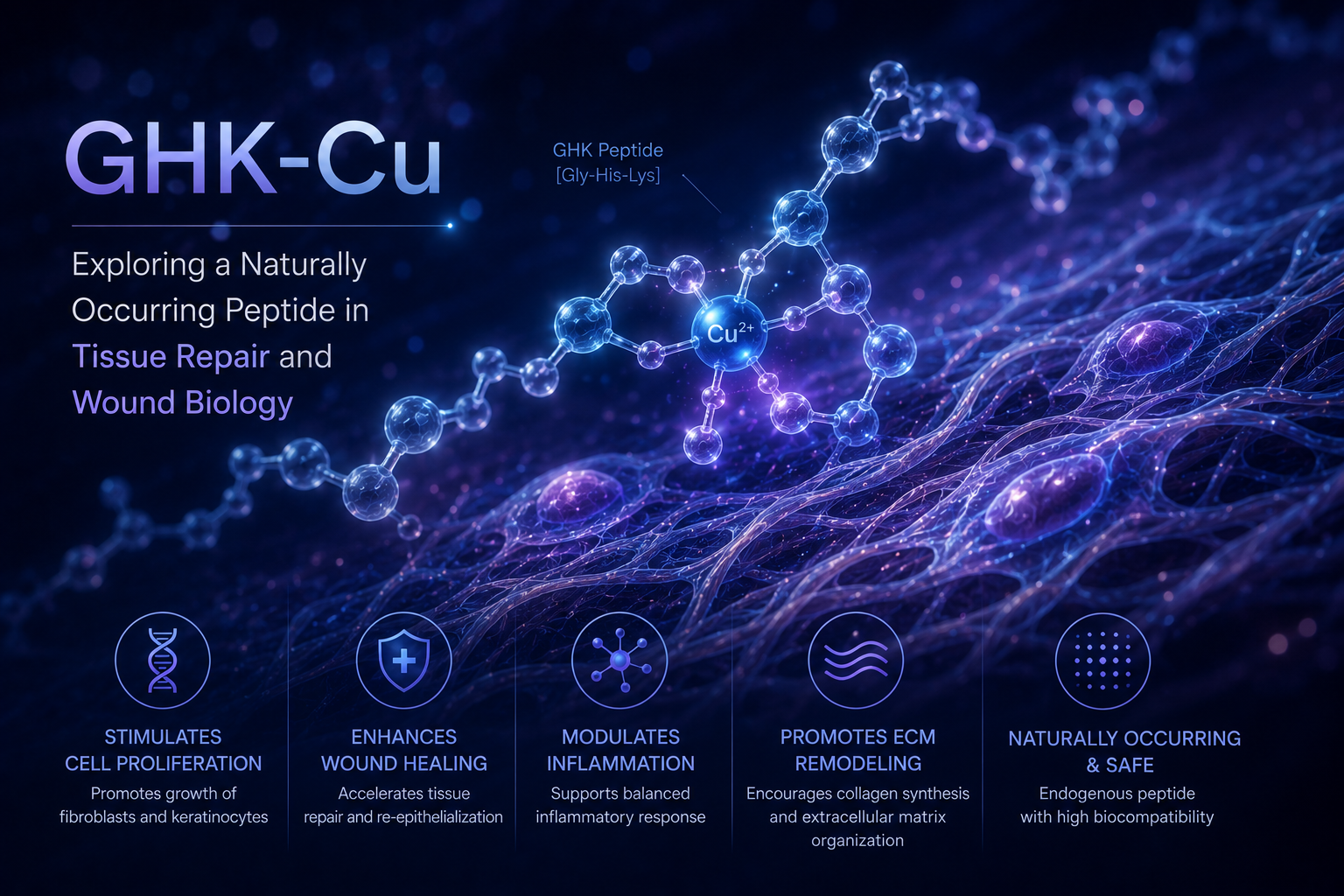
GHK-Cu consists of a short peptide (glycyl-L-histidyl-L-lysine) bound to a copper ion (Cu²⁺). This complex is present in healthy tissue and tends to decline with age.
In experimental systems, GHK-Cu participates in processes associated with:
- extracellular matrix remodeling
- angiogenesis
- modulation of inflammatory responses
- antioxidant pathways
- recruitment of repair-related cells
These properties make it a molecule of interest in the study of tissue repair.
Biological Roles of GHK-Cu in Wound Healing
1. Extracellular Matrix Support
In laboratory settings, GHK-Cu has been shown to influence fibroblasts and promote the synthesis of:
- collagen
- elastin
- glycosaminoglycans
These structural proteins are essential for healthy tissue remodeling.
2. Angiogenesis
Experimental studies indicate that GHK-Cu can stimulate growth factors such as:
- VEGF (vascular endothelial growth factor)
- FGF-2 (fibroblast growth factor-2)
These factors support new blood vessel formation—a key component of wound repair.
3. Anti-inflammatory and Antioxidant Activity
GHK-Cu is linked to activation of the Nrf2 pathway, which regulates antioxidant defense mechanisms.
This may help reduce oxidative stress and moderate inflammatory responses in injured tissue.
4. Immune Cell Recruitment
In preclinical models, GHK-Cu acts as a chemoattractant for macrophages and neutrophils, two cell types essential for clearing debris and initiating early phases of wound healing.
Evidence from Experimental and Animal Studies
GHK-Cu has been evaluated in a variety of animal models, including diabetic and ischemic wound models that share features with chronic wounds in individuals with spinal cord injury.
Reported findings include:
- accelerated wound closure
- increased collagen deposition
- reduced inflammatory markers
- improved structural organization of healed tissue
Studies using collagen dressings or biomaterial carriers containing GHK-Cu often show more substantial effects than studies using simple topical creams, suggesting that formulation plays a meaningful role in how the molecule interacts with the wound environment.
What the Evidence Does Not Yet Show
Despite promising laboratory and animal findings, several limitations remain:
Limited Human Clinical Data
There is no large-scale clinical evidence for GHK-Cu in chronic wounds or pressure ulcers in spinal cord injury populations.
Most published research involves:
- preclinical models
- small pilot studies
- in vitro (cell-based) systems
Importance of Comprehensive Wound Care
Existing research emphasizes that GHK-Cu cannot replace standard wound-care protocols, which remain essential:
- pressure relief
- infection control
- regular cleaning and debridement
- optimized nutrition
GHK-Cu, where used, is considered adjunctive rather than curative.
Delivery Formulation Matters
Because the peptide’s activity depends on stability and bioavailability, advanced formulations (e.g., hydrogels, collagen scaffolds, controlled-release systems) may be necessary to achieve meaningful tissue interaction.
Future Directions
Research interest in GHK-Cu continues, particularly in the context of:
- biomaterial-supported delivery systems
- copper-peptide interactions in chronic wounds
- potential injectable formulations for targeted delivery
- molecular pathways linking GHK-Cu to fibroblast and immune responses
Future clinical studies will be necessary to determine how these experimental findings translate into human wound-care practice, especially for complex cases such as chronic ulcers in spinal cord injury.
Conclusion
GHK-Cu is a biologically active peptide–copper complex with well-documented roles in tissue repair pathways under experimental conditions. While early findings from laboratory and animal research are encouraging, its relevance to chronic wound management in human SCI populations remains to be established. Continued research may help clarify how this molecule can be integrated into broader wound-healing strategies that combine cellular, biochemical, and biomechanical approaches.