Epidural Stimulation: Electrical Activation of Spinal Circuits After SCI

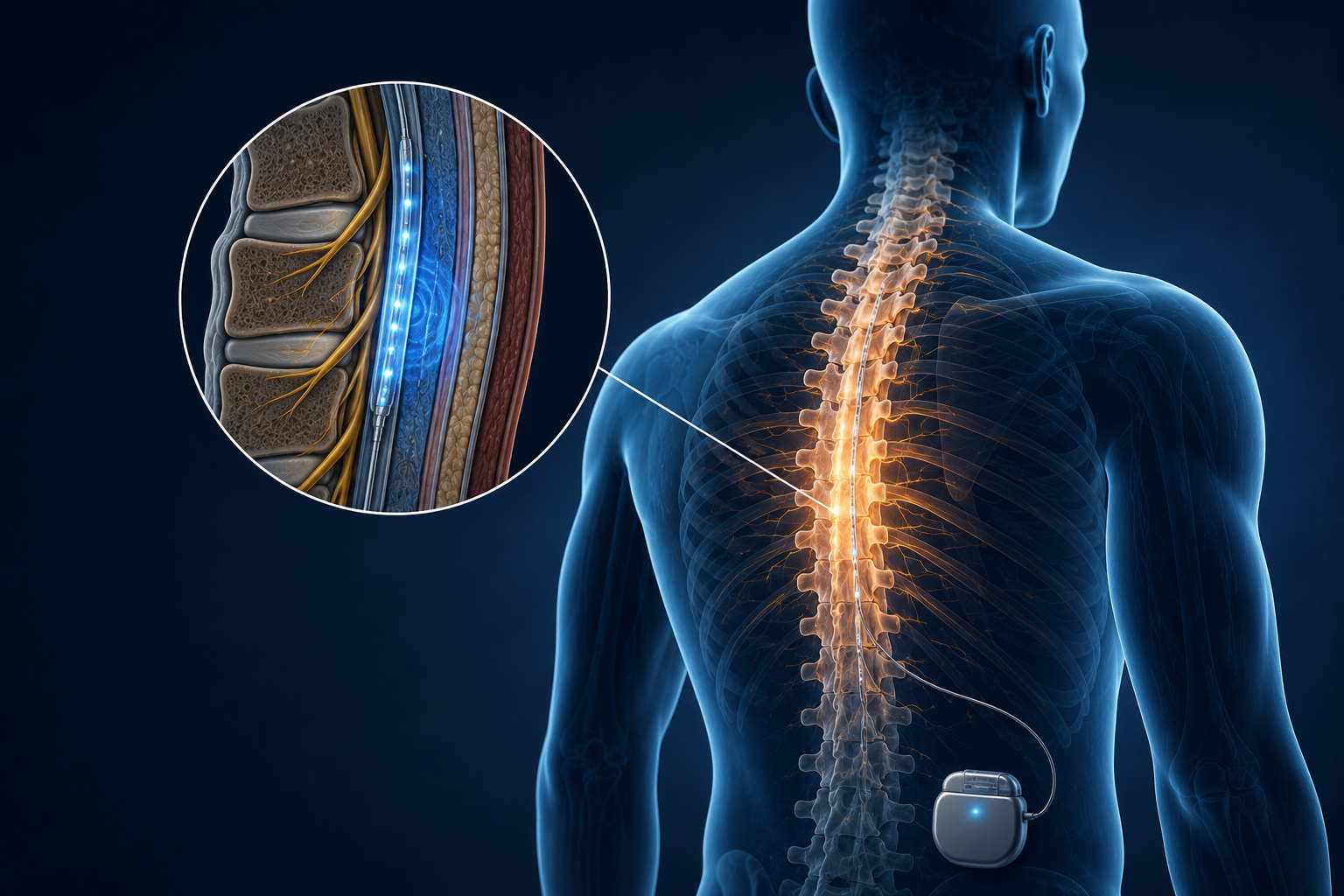
Epidural stimulation (ES) is an experimental neuromodulation approach in which a small array of electrodes is implanted over the lumbosacral spinal cord. By delivering patterned electrical pulses, the system activates spinal circuits below the injury, enabling them to respond to voluntary inputs that would otherwise be too weak to produce movement.
ES does not repair the spinal cord. Instead, it recruits existing circuits, allowing them to function despite disrupted connections from the brain.
Mechanism of Action
Epidural stimulation works by:
- raising the excitability of spinal networks
- enabling weak descending signals to trigger coordinated muscle activity
- engaging central pattern generators (CPGs) related to stepping and postural control
- promoting long-term plasticity when combined with rehabilitation
These mechanisms rely on the fact that spinal circuits retain intrinsic functional capacity even when supraspinal input is partial or impaired.
Research Findings
Across human and animal studies, epidural stimulation has demonstrated:
- Voluntary movement enabling
Some individuals with chronic motor-complete injuries regained the ability to intentionally move legs, ankles, or toes while stimulation is active. - Improved standing and stepping
When paired with intensive training, ES can generate weight-supported standing and assisted stepping movements. - Autonomic effects
Studies report improvements in blood pressure stability, bladder function, thermoregulation, and sexual function in some participants. - Enhanced plasticity
Long-term stimulation with training can strengthen residual neural pathways, occasionally allowing movement even when stimulation is off, though this remains rare and experimental.
Limitations
Epidural stimulation remains an early-stage, high-complexity intervention:
- requires surgical implantation
- outcomes vary considerably
- does not restore natural walking
- depends on continual training and specialized support
- access is limited to research centers
Despite these limitations, ES has become one of the most promising neuromodulation approaches for functional enhancement in chronic SCI, transforming how researchers view spinal circuit capability.