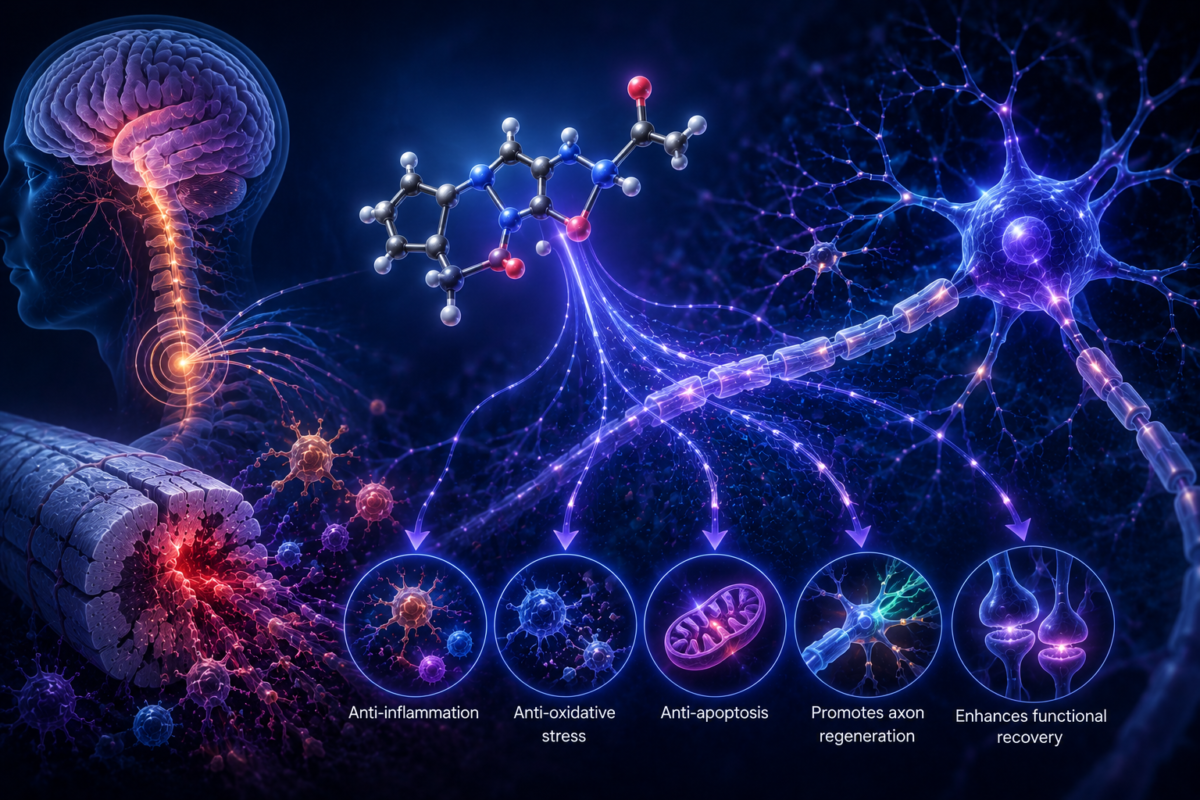
Psilocybin and Spinal Cord Injury (SCI)

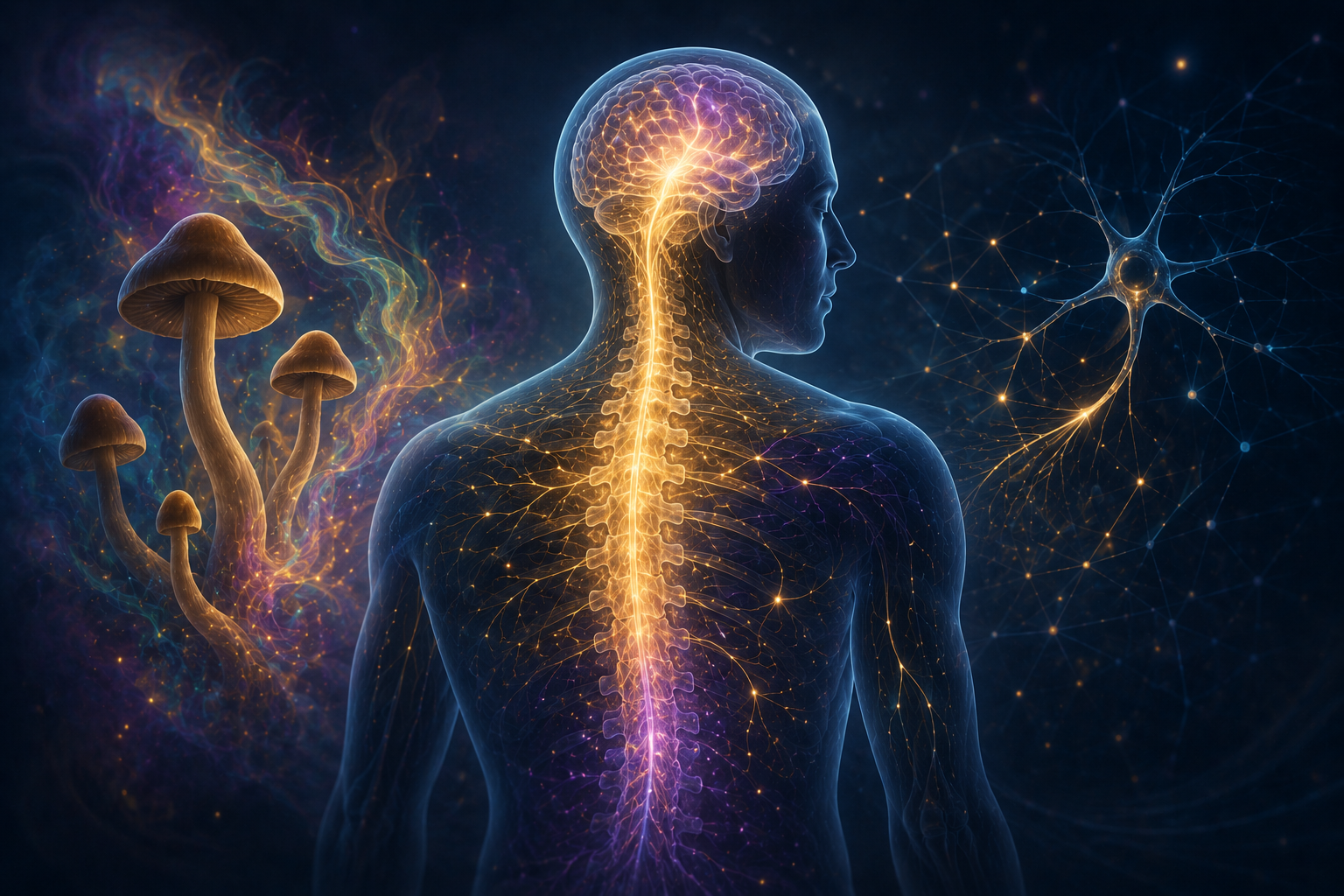
Overview
Psilocybin is a naturally occurring compound found in certain mushrooms. When taken, the body converts it into psilocin, a molecule that interacts with serotonin systems in the brain. In recent years, psilocybin has gained attention for its potential to influence mood, inflammation, and neuroplasticity. While it hasn’t yet been formally studied in spinal cord injury (SCI), several mechanisms suggest it could someday hold therapeutic value.
How Psilocybin Works
After ingestion, psilocybin turns into psilocin—a compound similar in shape to serotonin. Because of this similarity, psilocin can activate serotonin receptors, especially 5-HT2A. These receptors are involved in regulating:
• Mood and emotional processing
• Sensory perception
• Inflammation pathways
• Neural plasticity (the brain’s ability to adapt and reorganize)
Although most current research focuses on mental health, these biological effects overlap with systems affected after SCI.
Why Psilocybin Is Being Considered for SCI
SCI leads to changes in the nervous system that affect physical, emotional, and inflammatory processes. Psilocybin is interesting because it appears to influence many of these same systems.
- Neuroplasticity Support
Psilocybin may temporarily increase the brain’s flexibility, helping networks reorganize. This raises the question of whether such plasticity might support rehabilitation or adaptive rewiring after SCI.
- Anti-Inflammatory Signals
Some studies suggest psilocybin may reduce certain inflammatory markers. Because inflammation contributes to long-term SCI complications, this is an area worth exploring.
- Serotonin System Modulation
Serotonin plays a major role in motor tone, autonomic function, and sensory signaling. After SCI, these pathways become disrupted. Psilocin’s interaction with serotonin receptors could potentially influence:
- Spasticity*
- Autonomic regulation
- Sensory processing
*Not always predictably—some individuals report temporary increases in spasms.
- Psychological Well-Being
Psilocybin has shown promising results in reducing depression, anxiety, and trauma-related symptoms. These are common challenges for individuals recovering from SCI and significantly impact quality of life and rehabilitation outcomes.
Spasms During Psilocybin Use
Some SCI individuals have reported increased spasms during a psilocybin session. While no formal research exists, several likely explanations include:
- Heightened neural activity during the experience
- Increased serotonin receptor stimulation in spinal pathways
- Emotional intensity or sympathetic nervous system activation
These spasms are generally temporary and resolve once the experience ends. Whether they reflect a risk or simply a transient effect is still unknown.
Where Research Might Go
Although early and purely exploratory, psilocybin could one day be studied for potential benefits in:
- Mood stabilization
- Chronic pain response
- Neuroplasticity-related recovery
- Inflammation modulation
- Quality-of-life improvements
Summary
Psilocybin has not yet been tested in spinal cord injury, but the biology behind it—serotonin signaling, inflammation control, and neuroplasticity—intersects with many of SCI’s long-term challenges. The scientific curiosity around psilocybin in SCI is growing, and foundational research in controlled environments may help clarify its true potential.
As with all emerging therapies, careful research, medical oversight, and step-by-step validation are essential before any conclusions can be drawn.