
New Approaches to Modulating CSPG Signaling After Spinal Cord Injury

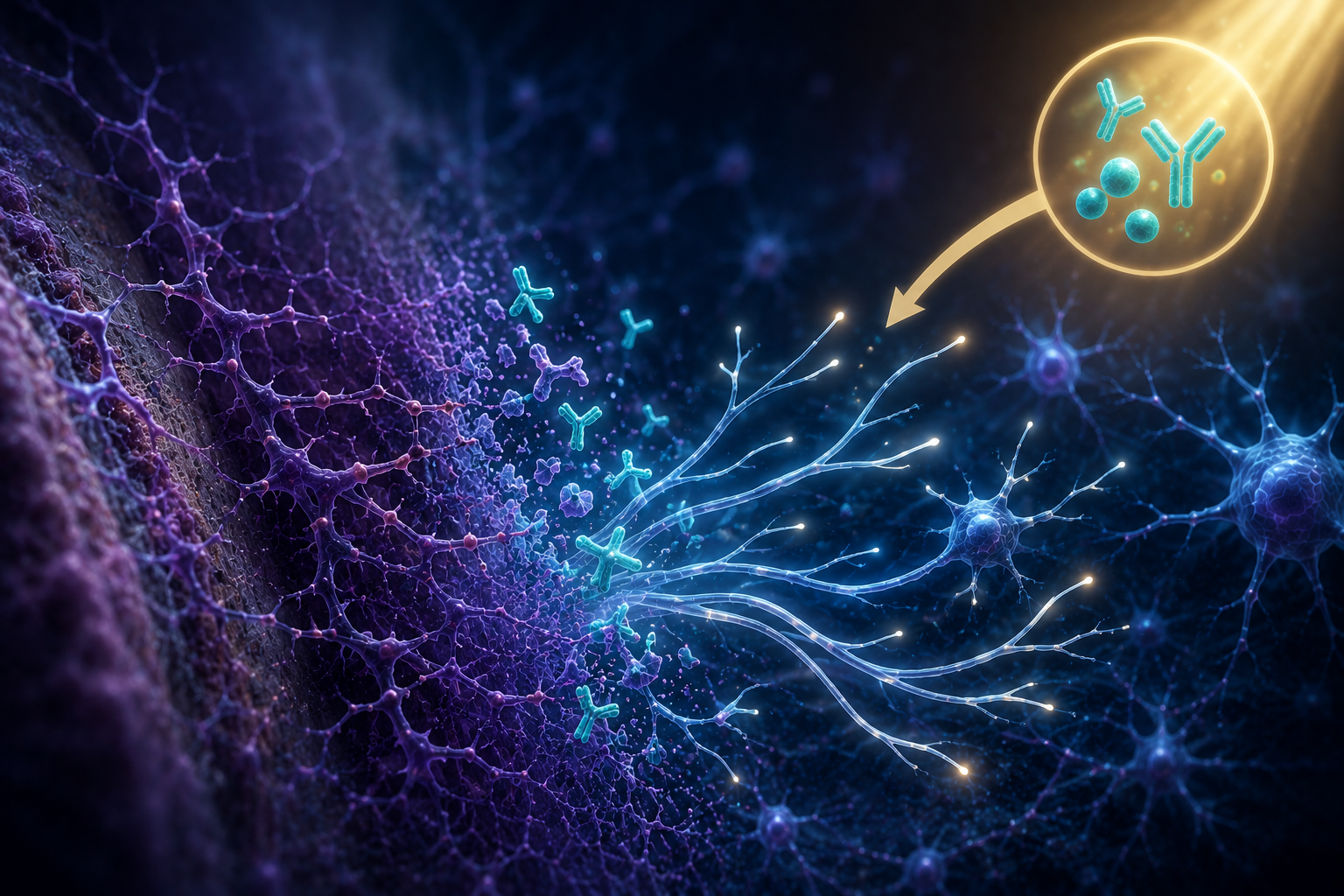
A recent wave of studies is taking a closer look at how chondroitin sulfate proteoglycans (CSPGs) contribute to long-term inhibition after spinal cord injury. Instead of treating CSPGs as a single barrier, new research suggests that different sulfation patterns within CSPGs may influence neurons in different ways.
One study published in Frontiers in Cellular Neuroscience showed that modifying specific CSPG sulfation motifs can change how axons respond to an inhibitory environment, even without fully degrading the molecules. The authors reported that certain sulfation profiles may be more closely linked to growth arrest than others (Brown et al., 2022).
Another recent paper in eLife compared how neurons react to different CSPG structures and found that axon behavior varies depending on the composition of the ECM, suggesting that the inhibitory environment is more complex—and more dynamic—than previously thought (Zhang et al., 2023).
Together, these studies point to a growing focus on fine-tuning the extracellular environment rather than relying on broad interventions. This line of research may help explain why some treatments succeed in controlled experimental systems but are difficult to translate into consistent outcomes.
The overall message is clear: understanding the detailed structure of CSPGs could open the door to more precise approaches for reducing chronic inhibition after injury.
References
Brown JM, Xia L, Shoichet MS. CSPG sulfation patterns influence neuronal growth and ECM signaling. Frontiers in Cellular Neuroscience. 2022.
Zhang H, et al. Differential neuronal responses to distinct CSPG structures after injury. eLife. 2023.
