
A Glimpse on NVG-291 History

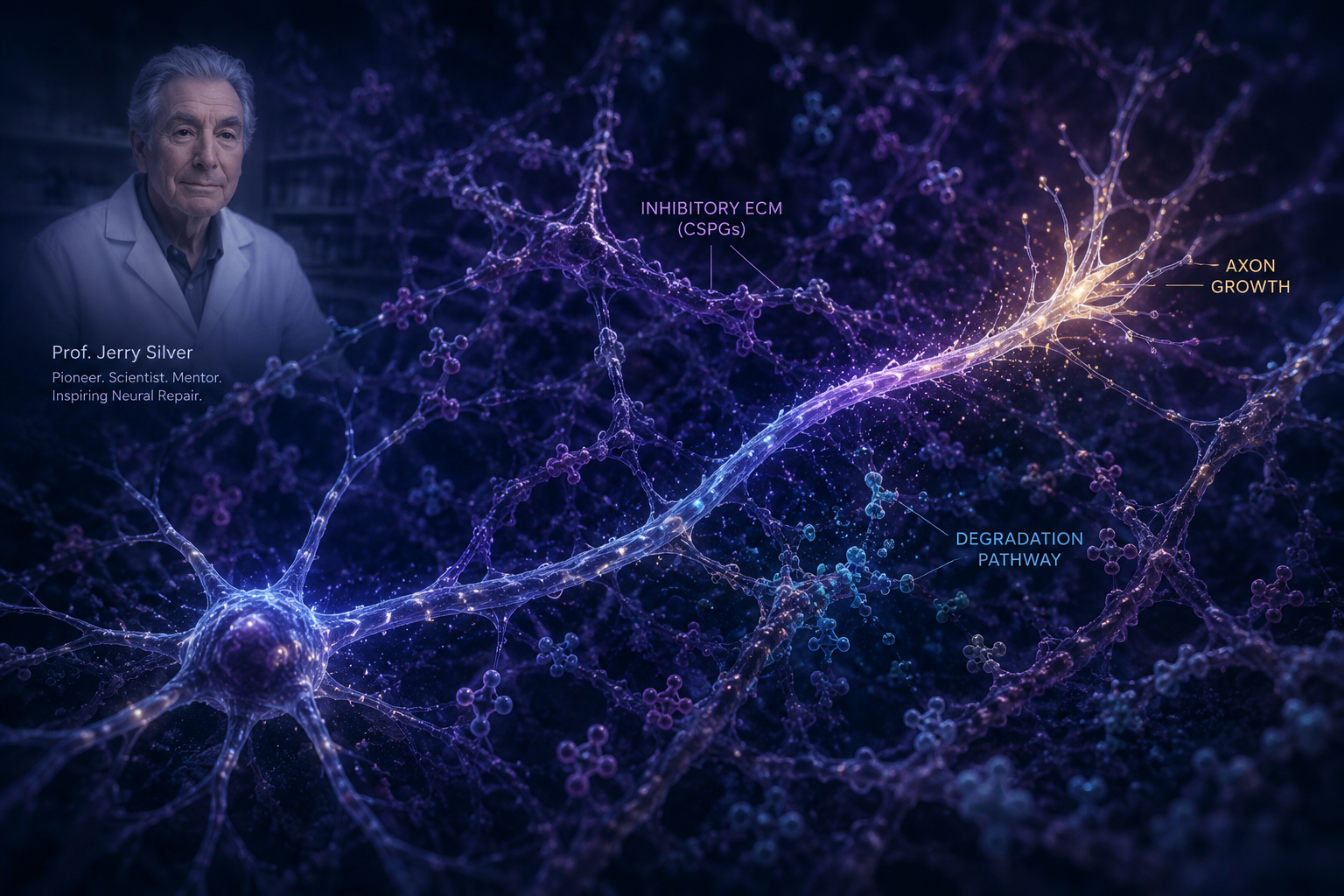
40 Years of Dr. Jerry Silver’s Groundbreaking Research Now Reaches SCI Patients
Dr. Jerry Silver’s pioneering work in neurobiology, which began in the 1980s, has led to a transformative breakthrough for spinal cord injury (SCI) treatment. What started with his exploration of retinal development in the 1980s has now culminated in NVG-291, a peptide poised to revolutionize SCI treatment.
Key Milestones in Dr. Silver’s Journey:
- 1980s: Dr. Silver discovered a family of molecules, proteoglycans, that act as natural inhibitors, preventing nerve fibers from growing in the wrong direction in the retina. This discovery set the foundation for future spinal cord injury research.
- 1990s: Dr. Silver’s research expanded to the spinal cord, revealing the same inhibitory proteoglycans that block nerve regeneration in the spinal cord.
- 2002: A major breakthrough in England, where injecting chondroitinase enzyme into the spinal cord resulted in significant nerve regeneration and functional recovery—an important first step toward addressing SCI.
- 2009-2015: Dr. Silver’s team discovered the receptor PTPσ, a critical component for nerve regeneration, which led to the development of NVG-291.
- 2015: The first introduction of ISP (the peptide now known as NVG-291) in a Nature magazine paper marked a major step toward clinical applications.
- 2016: Harold Punnet, a Canadian dentist whose family was impacted by SCI, helped establish NERVEGEN, bringing NVG-291 closer to clinical trials.
- 2018: Pre-clinical studies demonstrated that NVG-291 showed more promise in treating chronic injuries than acute ones, paving the way for its use in SCI patients with longer-standing injuries.
- 2024: SCI patients are now being injected with NVG-291, bringing hope for nerve regeneration and recovery.
What’s Next:
This monumental achievement in SCI treatment is just the beginning. As NVG-291 moves into clinical trials, Dr. Silver’s work promises to offer significant improvements in recovery for individuals with spinal cord injuries, bringing us closer to a future where SCI patients may regain lost function and mobility.